Sonoran desert conditions drive roof rats directly into residential structures seeking moisture and shelter, particularly across irrigated landscapes. Properties near dense citrus canopies in Arcadia and North Central…
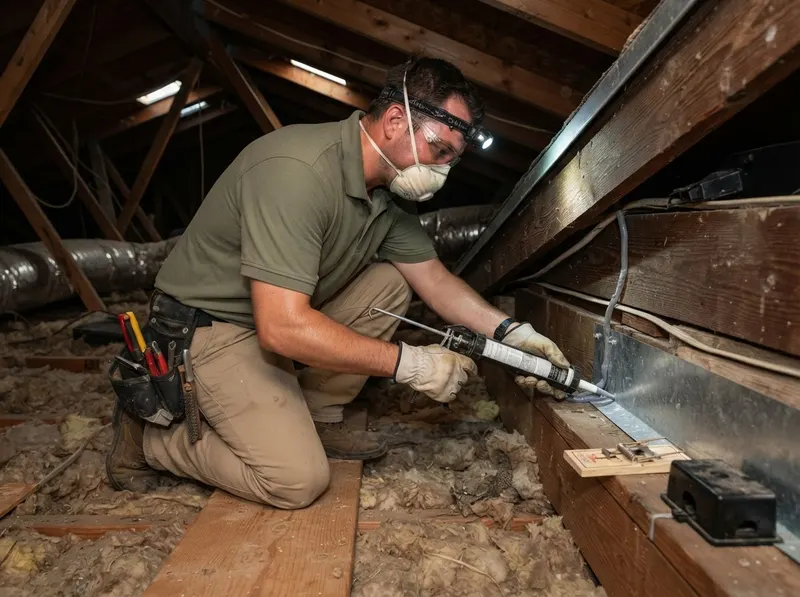
Sonoran desert conditions drive roof rats directly into residential structures seeking moisture and shelter, particularly across irrigated landscapes. Properties near dense citrus canopies in Arcadia and North Central Phoenix or along flood-irrigated easements in the Biltmore Area experience severe pressure from Rattus rattus. These rodents access tile roofs and Spanish barrel fascia by leaping from tall fan palms, bougainvillea trellises, and adjoining citrus limbs. Once established, they compress blown fiberglass insulation, gnaw through 120-volt Romex electrical wiring, and follow air-conditioning line chases into attic spaces. Trapping alone does not solve an active infestation if secondary pathways remain open, as desert roof rats continuously follow pheromone trails along exterior stucco and block-wall microclimates.
Decision guidance depends strictly on the structural integrity of the roofline. If rodent presence is isolated to noises heard inside ceilings but roof tile junctions remain intact, interior trapping arrays combined with small-gap pipe chinking resolve the colony. If tile roof returns, dormers, and unmeshed soffit vents present openings larger than 0.5 inches, common in historic structures in the Willo Historic District or Encanto Village, complete perimeter exclusion must accompany trapping. Poison baits inside attics create severe odor hazards in sustained 110-degree Phoenix summer temperatures; mechanical trapping eliminates interior decay risks by removing carcasses within 48 to 72 hours.
The process follows a tactical, three-step sequence. Step 1: Technicians conduct a 360-degree roof and attic audit to map rub marks, droppings, and thermal insulation tunnels. Step 2: Mechanical expanded-trigger traps are set along attic joist runways, avoiding rodenticide distribution that leaves carcasses inside inaccessible exterior wall voids. Step 3: Technicians seal roof-pipe jacks, Spanish tile eave voids, and utility penetrations using 16-gauge 1/4-inch galvanized wire mesh and exterior-grade polyurethane sealant that rats cannot chew through. Homeowners in the Ahwatukee Foothills bordering South Mountain Park and Preserve or Desert Ridge developments near wild desert washes trade the minor upfront expense of structural exclusion for permanent defense against recurring seasonal invasions.
Every job gets a firm, written price after a free on-site visit.
Tell us about your roof rat attic trapping and exclusion job in Phoenix and we'll send a clear, written quote, usually the same day.
 Copper Cactus Pest Control